
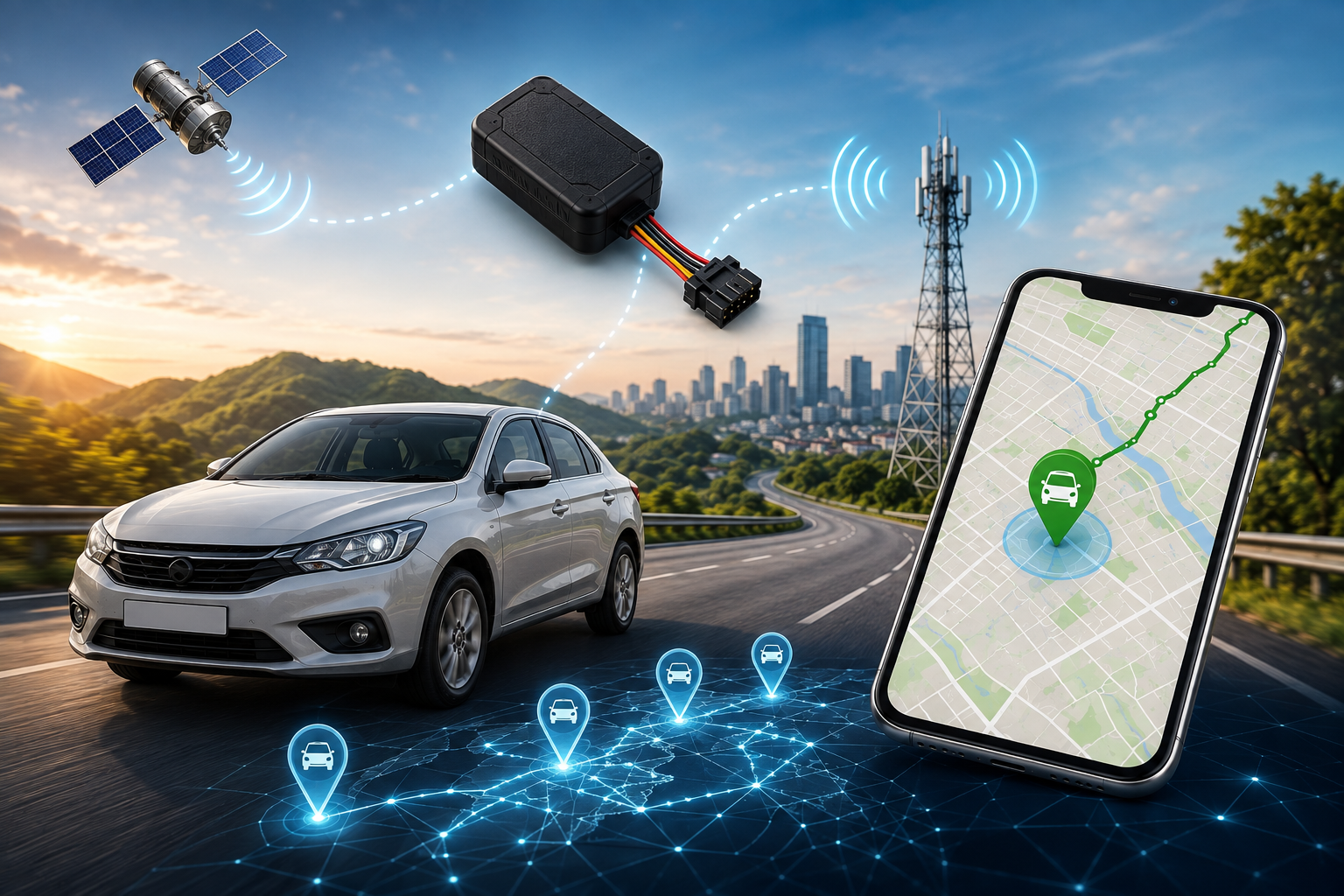
GPS vehicle tracking has become an increasingly useful technology for car owners, businesses and fleet operators. A GPS vehicle tracking system allows you to monitor a vehicle’s location, movement and trip information through a mobile phone or computer.
Whether you own a personal car, manage commercial vehicles or operate a fleet, understanding how GPS tracking works can help you choose the right vehicle tracking solution.
What Is GPS Vehicle Tracking?
GPS vehicle tracking uses a tracking device installed inside a vehicle to determine its location using signals from GPS satellites. The device sends location information through a mobile communication network to a tracking platform.
The vehicle owner can then view the information through a mobile application or web dashboard.
A typical GPS tracking system works through four main stages:
GPS Satellite → Tracking Device → Mobile Network → Tracking Platform
This process allows vehicle location and other available information to be monitored remotely.
How Does a GPS Tracker Work in a Car?
A GPS tracker for a car receives signals from GPS satellites to calculate the vehicle’s position. The tracker then sends this information to a server using a cellular network.
The tracking platform processes the information and displays it on a map.
Depending on the device, you may be able to view:
- Current vehicle location
- Vehicle movement
- Route and trip history
- Speed information
- Ignition status
- Geofence activity
- Alerts and notifications
This makes GPS tracking useful for both personal vehicles and commercial fleets.
What Is Real-Time Vehicle Tracking?
Real-time vehicle tracking allows you to see where your vehicle is currently located.
Instead of relying only on a previous location, the tracking platform regularly receives updated information from the GPS device. This allows vehicle owners to follow movement and monitor trips remotely.
Real-time tracking can be useful for checking:
- Where a vehicle is currently located
- Whether a vehicle is moving or stopped
- The route being followed
- Unusual vehicle movement
- Approximate travel progress
The actual update frequency depends on the tracking device, network connectivity and configuration.
What Is GPS Route History?
GPS route history stores information about previous vehicle journeys.
For example, a vehicle owner may be able to review where the car travelled during a particular period, including the route taken and stops made along the journey.
Route history can help with:
Trip monitoring: Review completed journeys.
Vehicle usage: Understand how a vehicle is being used.
Fleet management: Compare routes and vehicle activity.
Travel records: Review previous trips when needed.
How Does Geofencing Work?
A GPS geofence is a virtual boundary created around a specific location.
For example, you can create a geofence around your home, office, business premises or another area. When the vehicle enters or leaves that defined area, the tracking system can generate an alert when supported by the device and platform.
Geofencing can be useful for:
- Vehicle arrival notifications
- Departure alerts
- Fleet area monitoring
- Business vehicle management
- Security monitoring
What Are GPS Vehicle Alerts?
GPS tracking systems can provide different types of alerts depending on the device and software.
Common alerts can include:
- Overspeed alerts
- Ignition alerts
- Geofence alerts
- Movement alerts
- Vehicle stoppage alerts
- Power or device alerts
These notifications help vehicle owners identify important events without constantly watching the tracking screen.
Benefits of GPS Tracking for Personal Vehicles
A personal vehicle GPS tracker can provide useful information to private car owners.
Better Vehicle Visibility
You can check your vehicle’s location remotely instead of relying only on manual updates.
Improved Security
Location monitoring can provide an additional layer of visibility when your vehicle is parked or being used.
Easy Trip Monitoring
Review previous routes and journeys through the tracking platform.
Convenient Mobile Access
A smartphone-based tracking application makes it easier to check vehicle information while away from your computer.
Benefits of GPS Tracking for Commercial Vehicles and Fleets
For businesses, GPS tracking can be part of a broader fleet management system.
Fleet operators can use tracking technology to monitor multiple vehicles, review vehicle movement, manage routes and respond to alerts.
GPS fleet tracking can support:
Vehicle visibility
Know where fleet vehicles are located.
Route monitoring
Review routes and travel activity.
Operational control
Monitor vehicle movement and activity.
Driver monitoring
Review available driving-related information such as speed or alerts.
Fleet reporting
Use historical information to understand vehicle activity.
GPS Tracking and AIS 140
It is important to understand the difference between general GPS tracking and AIS 140 tracking devices.
Personal GPS tracking systems are commonly selected for vehicle monitoring and security.
AIS 140 is associated with applicable requirements for certain categories of public service and commercial vehicles in India. Where AIS 140 compliance is required, the vehicle operator should use an appropriate compliant device and follow the relevant regulatory requirements.
Semtrack provides Nagaland RTO Approved AIS 140 GPS tracking solutions for applicable commercial vehicles, taxis and fleets.
GPS Tracking in Nagaland
GPS tracking can be particularly useful for vehicles travelling across Nagaland, including routes between Dimapur, Kohima and other towns.
For personal vehicle owners, GPS tracking provides convenient location monitoring and trip history. For businesses and fleet operators, it can provide greater visibility over multiple vehicles.
Semtrack provides GPS tracking solutions in Dimapur, Nagaland for personal vehicles, commercial vehicles and fleet applications.
How to Choose the Right GPS Tracker
Before buying a GPS tracking device for your vehicle, consider the following:
Tracking Accuracy
Choose a system that provides dependable location information.
Mobile and Web Access
A useful tracking platform should make vehicle information easy to access.
Alerts
Check which notifications are available and whether they match your requirements.
Route History
Trip history can be valuable for both personal and business use.
Installation
Consider whether the device requires professional installation or supports a simpler installation method.
Customer Support
Good after-sales support can be important when installing and using a vehicle tracking system.
Why Choose Semtrack?
Semtrack provides GPS vehicle tracking solutions in Nagaland for personal vehicles, commercial vehicles and fleets.
Our solutions are designed to provide practical vehicle monitoring through real-time tracking, route history, alerts and fleet management features. We also provide Nagaland RTO Approved AIS 140 GPS tracking devices for applicable vehicles.
Final Thoughts
A GPS vehicle tracking system provides more than just a location on a map. It can help vehicle owners monitor movement, review journeys, receive alerts and maintain better visibility of their vehicles.
Whether you need a GPS tracker for a personal car, a commercial vehicle tracking solution or a complete fleet management system, choosing the right device and tracking platform is important.
Semtrack provides reliable GPS tracking solutions in Dimapur and across Nagaland, helping vehicle owners and businesses stay connected with their vehicles.
Looking for a GPS tracker for your vehicle? Contact Semtrack for a suitable GPS tracking solution.
Comments are closed